
Below-Grade Protection
Foundation Waterproofing
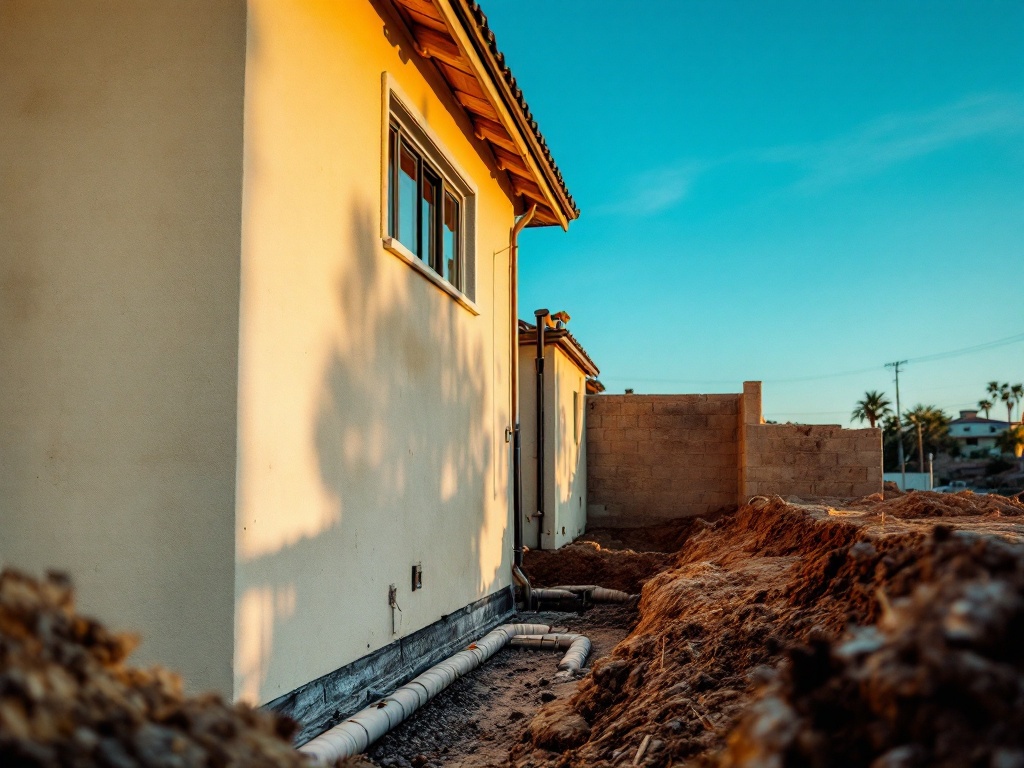
When water gets below grade it does not knock first. It shows up as damp stem walls, musty crawl spaces, and efflorescence bloomin...
Foundation Waterproofing details →Give Water Somewhere To Go / San Diego County
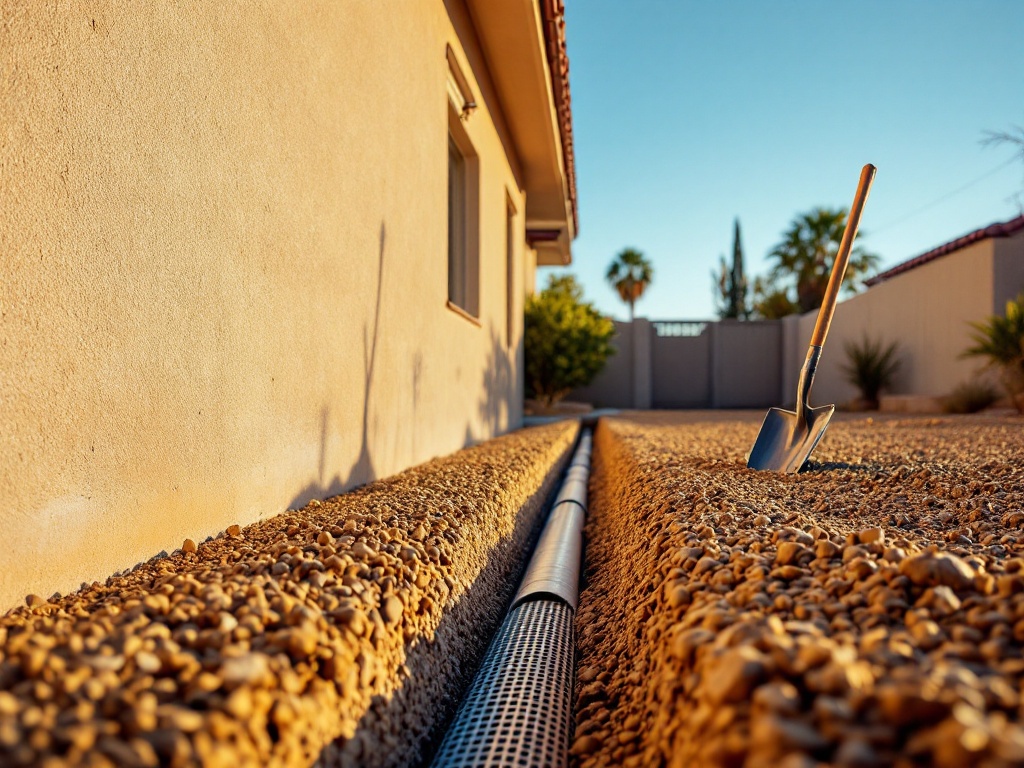
Half of the waterproofing problems in San Diego County are really drainage problems wearing a disguise. We design and install French drains, area drains, and grading corrections that move water away from structures, so membranes and coatings are not asked to hold back ponds.
Request: Free Assessment
Quoted by the owner. No pressure, no sales rep follow-up circus.
Signs your property has a drainage problem
Membranes and sealers resist water. Drainage removes it. When a wall or slab shows chronic moisture, the honest first question is not which coating to apply but why water is sitting there at all. Fixing the drainage often shrinks the waterproofing scope dramatically, and we would rather sell you the right combination than the expensive one.
San Diego lots drain across canyons, slopes, and compacted fill, and every property moves water differently. We trace the flow during our assessment: where roof water lands, where surface water travels, where it collects. The system that comes out of that might be a French drain relieving a wet wall, area drains collecting a flat patio, grading that redirects a slope, or downspout piping that finally carries roof water somewhere useful.
Good drainage is invisible and silent for decades. We build with proper slopes, cleanouts for future maintenance, filter fabric to keep systems from silting shut, and discharge points that daylight legally and usefully. Gravity does not break down, which is why we prefer it over pumps wherever the terrain allows.
Scope of Work
Pricing, Honestly
A properly built exterior French drain with filter fabric, gravel, and a daylighted discharge commonly runs about $30 to $70 per linear foot in San Diego County. Downspout tie-ins and area drains are smaller add-ons; hardscape removal and restoration add to it.
Drainage pricing follows trench length, depth, obstacles, and discharge routing. A downspout rerouting is a small project. A full perimeter French drain with a daylighted discharge is a bigger one. Because drainage frequently reduces the waterproofing scope elsewhere, we quote them together so you can see the tradeoff working in your favor.
What drives the cost
Typical San Diego County ranges. Every project is quoted after a free on-site assessment.
Paying For The Work
Many homeowners fund waterproofing and foundation work through a home-equity line of credit (HELOC), a home-equity loan, or an FHA 203(k) loan, and we're glad to discuss payment options during your free estimate.
General information only. Aqua Choice is a waterproofing contractor, not a lender, and does not offer in-house financing. Rates, terms, and eligibility are set by your own bank or lender.
Systems We Install
We build drainage with products chosen for your lot and flow, not a one-size catalog. We are a specialist installer, not a single-brand dealer, so each component is matched to the job and set up to be maintained for the long run.
How We Work
We trace where water is actually entering before anything is quoted. Sealing over a mystery is how the same failure happens twice.
Substrate repair, flashing, and slope come before any product goes down. It is the part of the job you never see, and it decides everything.
Materials matched to your surface and exposure, installed to spec, checked before we call it done.
Related Services
Below-Grade Protection
When water gets below grade it does not knock first. It shows up as damp stem walls, musty crawl spaces, and efflorescence bloomin...
Foundation Waterproofing details →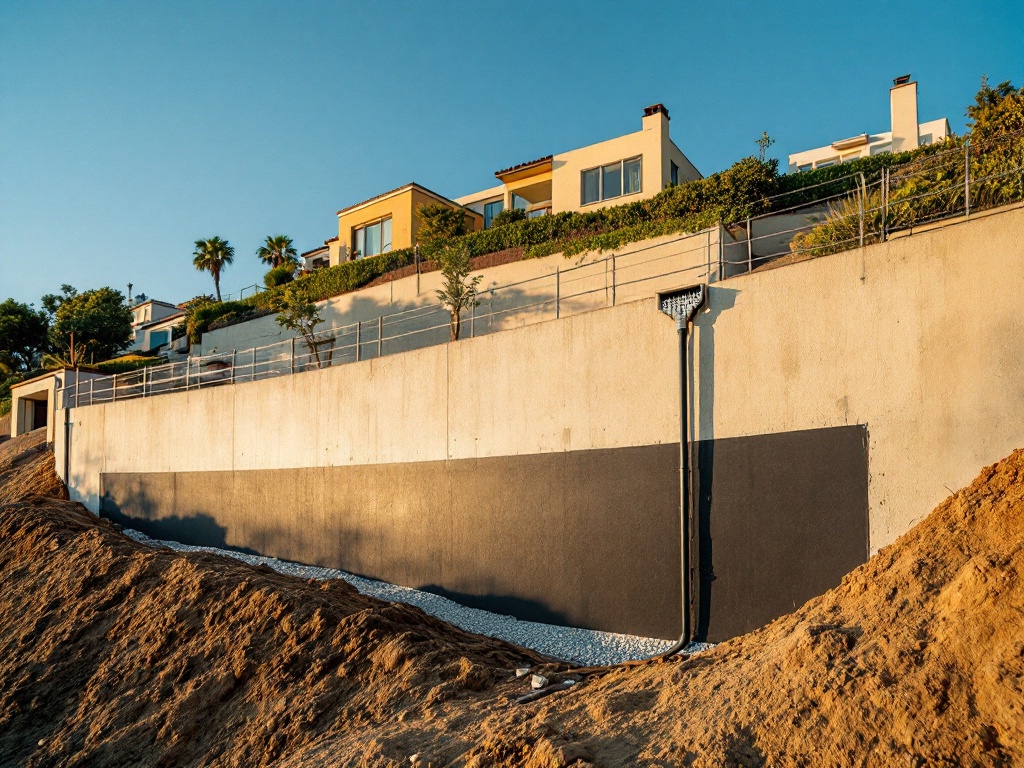
Hillside + Canyon Properties
San Diego is a county of hillsides, and hillsides mean retaining walls holding wet soil back from living spaces, patios, and found...
Retaining Wall Waterproofing details →
Slabs, Walls + Surfaces
Concrete looks permanent, but it is porous, it cracks, and it moves. We waterproof concrete patios, walkways, walls, and structura...
Concrete Waterproofing details →Specialist vs. Shortcut
The same leak, three different approaches. The difference is everything you cannot see from the surface.
| What actually matters | Aqua Choice Waterproofing | The handyman with a bucket of sealant | Wait-and-see DIY patch |
|---|---|---|---|
| Licensed CA specialty contractor | Yes, CA Lic. #1063501, and waterproofing is the whole business | Often unlicensed or a general handyman ticket | No license, no accountability |
| Diagnoses the water source first | Opens up and inspects before quoting | Seals the surface it can see | Guesses at the visible wet spot |
| Fixes drainage, not just the surface | Corrects slope, flashing, and drainage so water never sits | Rolls coating over the same bad detail | Caulk and hope |
| Correct materials for your surface | System matched to substrate and exposure, to spec | One product for every job | Whatever is on the store shelf |
| Handles the dry rot underneath | Replaces rot and repairs substrate before sealing | Coats straight over soft wood | Left to spread |
| Backed workmanship you can call back on | Owner-accountable, stands behind the sealed source | Gone by the next winter | On you |
Our Promise
Because we diagnose where water actually enters before we seal anything, we stand behind the source we fix. If a leak returns through an entry point we identified and waterproofed, we come back and make it right.
Owner-accountable · CA Lic. #1063501 · Since 2012
Straight Answers
A French drain is a gravel and perforated pipe trench that collects water moving through soil. An area drain is a surface grate that collects water pooling on top. Wet walls usually want the first, flooded patios the second, and many properties need both working together.
Every system we build has a deliberate discharge: daylight at a lower point on the lot, a street gutter connection where permitted, or a dispersal area sized for the flow. A drain without a legal, functional outlet is just a buried bathtub, and plenty of the failed systems we replace prove it.
Age and silt. Systems built without filter fabric clog from the outside in, and systems without cleanouts cannot be maintained. We scope existing lines with the assessment and tell you whether restoration or replacement is the economical path.
Only when gravity has no path, which is rarer in San Diego's terrain than pump sellers suggest. Where one is genuinely needed we install it with an alarm and a maintenance plan, but a gravity solution that cannot fail during a power outage is always our first choice.
San Diego's heaviest groundwater and its power outages often arrive in the same storm, so a pump with no backup can quit at the exact moment it matters most. Where we install a sump, we pair the primary pump with a battery backup: a second DC pump and a deep-cycle battery that keep the pit clearing for hours if the power drops, plus a high-water alarm so you know if the level ever climbs. That is the difference between a pump that works in fair weather and one you can trust in the storm that actually tests it.
Both are matched to how much water actually reaches the pit, not to a catalog default. The basin is sized so the pump is not switching on and off every few seconds, which is what wears a pump out early. The pump itself, usually a one-third to one-half horsepower unit on a residential job, is matched to the water volume and the vertical lift up to the discharge point. Undersize it and it cannot keep up in a real storm; oversize it and it short-cycles. We measure the inflow during the assessment and size the system to it.
More than gravity, which is the honest reason we prefer a gravity drain wherever the terrain allows one. A sump has moving parts, so it needs a periodic test: pour water into the pit, confirm the float switch trips the pump on and the check valve holds so water does not run back. Keep the pit clear of silt and debris, and replace the backup battery on the schedule its maker specifies, because a dead battery is a backup that exists only on paper. Most pumps last several years, and we leave you with a simple plan so yours reaches the end of that life instead of failing early.